Tuesday, September 29, 2009

Job losses, early retirements hurt Social Security


by Steven Olemacher
posted by Jameel Murray

WASHINGTON — Big job losses and a spike in early retirement claims from laid-off seniors will force Social Security to pay out more in benefits than it collects in taxes the next two years, the first time that's happened since the 1980s.
The deficits — $10 billion in 2010 and $9 billion in 2011 — won't affect payments to retirees because Social Security has accumulated surpluses from previous years totaling $2.5 trillion. But they will add to the overall federal deficit.
Applications for retirement benefits are 23 percent higher than last year, while disability claims have risen by about 20 percent. Social Security officials had expected applications to increase from the growing number of baby boomers reaching retirement, but they didn't expect the increase to be so large.
What happened? The recession hit and many older workers suddenly found themselves laid off with no place to turn but Social Security.

click here to read more

Monday, September 28, 2009

Workers discover 401(k) plans are failing them in retirement

By Brian J. O'Connor / Detroit News Finance Editor
Posted by Alma Zhumagulova


If you're one of the more than 66 million workers covered by a 401(k) retirement plan, Nancy Hwa has some news for you.

"It was a tax shelter for end-of-the-year bonuses for bankers," says Hwa, spokeswoman for Retirement USA, a group working to improve retirement plans. "The 401(k) was never even intended to be a retirement plan."

And now, many workers are discovering, it isn't.

By the end of last year, the average 401(k) balance dropped to $57,200, down 28 percent from $79,600 in 2007, according to consulting firm Hewitt Associates. Forty-four percent of workers lost at least 30 percent.

Click here to read more

The new ‘retirement’ plan: Just keep working

Posted by Quang Nguyen


When Kathy Corrigan, 64, was let go last September from her job with a trade association, she already had begun to think about retiring after a 25-year career as a meeting planner.

But when she sat down and looked over her savings, she realized the 30 percent hit she took from the market meltdown meant her shrunken nest egg wouldn’t go far enough.

“The numbers just were not crunching right,” she said. “I don’t think I ever intended to fully retire. But it’s definitely not an option now — at least not for the immediate future. I’m still hoping that it will be no more than 5 years, but you have to continually reassess.”

Even before the collapse of the housing and financial markets last year, Americans were woefully unprepared to pay retirement in the traditional sense of a post-career period of leisure and personal pursuits supported by a pension, well-managed nest egg and Social Security.

Click here to read more

The old people are coming back!

by Jonathan Tse


The current economic situation of America is leading to many different changes. Probably one of the most drastic is the retirement plans of the elderly. No longer are people past the age of retirement staying at home relaxing and going on vacations all over the world. In fact, the new retirement plan for the elderly is to stay in the workforce.
The recession has made it so that the elderly cannot support themselves after retirement, so they are left with only two choices: to reduce their standards of living and spend less or to re-enter the workforce. Many more senior citizens are choosing to continue working and delay retirement either because of the fact that they are not able to reduce their spending by much, or because it is humiliating to admit a loss of wealth in front of family and friends. The current generation of senior citizens were expected to be growing and among the richest. Due to the recession, they are not pouring nearly as much into the economy as predicted earlier.
Many elderly people are re-entering the workforce in fields that they did not previously work in. In order to gain more of an advantage, more elderly people are also re-educating themselves by attending community colleges and attaining quick degrees so that they may quickly start working again. With the increasingly competitive working environment, and also stereotypical beliefs about older people, it is becoming much more difficult for the elderly to find and maintain long-term occupations.

http://www.msnbc.msn.com/id/32087898/ns/business-personal_finance/page/2/

http://hr.blr.com/news.aspx?id=4276

http://www.nytimes.com/2009/04/02/business/retirementspecial/02reskill.html?pagewanted=3&_r=1&ref=retirementspecial

As work force grays, employers lag behind

posted by Jonathan Tse

Older workers need flexibility, training, but often fail to get it


By Eve Tahmincioglu
msnbc.com contributor
updated 9:56 a.m. ET, Thurs., July 30, 2009


Eve Tahmincioglu
• Profile
• E-mail
Anne Staats was 75 when she took a year off work to care for her ailing husband.

After her husband passed away, she was ready to go back to her job as a receptionist for a home care and medical staffing company but didn't want to work full time. Fortunately for her the company, Interim HealthCare in Sunrise, Fla., had a program in place to hire older workers and allowed her to return to work three days a week with full benefits, including vacation and sick time.

“I was lucky to be working for Interim,” says Staats, now 85. “Other companies would look at you and say, ‘You’re too old.’”

Click here to read more

Thursday, September 24, 2009

How Retirement Planning Has Changed


By Jorden Meltz

After the events of last year, many soon to be retirees were left asking how will I still be able to retire at the age that I previously planned on retiring at? The realization for some is that they won't and instead face several more years of working ahead of them. Since 1992 there has been a dramatic drop in company pensions, 40% to 17%, and a rise in 401k Plans, 32% to 80%. The reason why the change in the two has affected so many is that 401k Plans depend upon how successfully the employee has invested their money and unfortunately even prior investing success did not prevent many from losing large percentages of their retirement funds. It is estimated 401k Plans lost 40% as the country entered into a recession over the past year. With a much greater emphasis now on 401k Plans people will be forced to take a more active role in their investments and it is now recommended people look to bond indexes and stocks that pay dividends for better performing investments. The events of the past year has lead most people looking to retire towards reevaluating their plans and investments and has hopefully left many of those people more knowledgeable and prepared to deal with the market then before.

Source 1

Source 2
Source 3

Health Care Costs and Retirement


by Leah Gorham

Proper planning for retirement is not only important for retirees to maintain the lifestyle they had before retirement, but may also be crucial for paying for the high cost of health care. Retirement health care costs are rising due to factors such as the increased use of technology and prescription drugs and at the same time, personal savings are decreasing and the Social Security system will likely fail to provide adequate support in the future.

In 2008 an analysis by the Employee Benefit Research Institute said that a couple currently at the age of 65 would need $635,000 to cover healthcare costs in retirement, not including long-term care costs. This estimate gives the retired couple a 90 percent chance of having enough money to cover all health bills beyond what Medicare covers as opposed to lower estimates.

Options for paying for health care and long-term care include Medicaid buying long-term care insurance, selling the family home when long-term care is needed, or tapping into the value of the home through a reverse mortgage. Many poor seniors will rely on Medicaid, while those with a higher income may prefer to buy insurance, which can cost about $3,500 a year if acquired at age 65. According to the American Council of Life Insurers approximately 48% of long-term care recipients and their families pay long-term care costs out of their own pockets, 41% qualify for Medicaid, 8% are getting temporary coverage provided by Medicare. and only 3% are paying with private long-term care insurance.

It is important to think about the options for long-term health care before the need is dire and prepare adequately for retirement health care costs early.

Source 1, Source 2, Source 3

The "Working Retirement" Conundrum


By Mary Clare McGraw

An increasing number of retirees are taking up a second job, even a second career, often totally unrelated to their pre-retirement career, with the underlying motivation of paying the bills. For a variety of reasons, surveys have shown that the majority of aging baby boomers are planning on working in retirement. That second job can be a great way for a retired individual to take up what was perhaps just an enjoyable hobby earlier in life and turn it into a source of income that acts as a security net in this unsure recession. Although it may be a necessity in order to maintain an income during a longer life expectancy, that second job owning a restaurant or a floral shop can be a pure joy and a way to stay occupied almost.
As enjoyable as a hobby-turned job can be, it is dangerous to depend on the possibility of that supplemental income later in life because there are a number of things that can happen to prevent an individual from being able to work. Studies have shown that one in four Americans won’t be able to work in retirement for one reason or another, whether it is a health problem, accident, or any unforeseen event. Working in retirement can be a blessing or a curse, but regardless of whether or not an individual plans to work in retirement, it is essential to save and invest years in advance.

Source 1, Source 2, Source 3

Wednesday, September 23, 2009

7 Ways to Mess up Your 401K


posted by Leah Gorham

By Liz Pulliam Weston

Not contributing at all is the biggest mistake people make, but there are others that can cost you substantially as well.

In many ways, the 401(k) picture looks bright.

Most folks who have access to a 401(k) take advantage of their workplace retirement plans. Average balances are up over the past few years. And workers seem to have finally gotten the message that company stock is not their best investment option.

But millions of workers are still blowing it every day when dealing with their retirement plans. Here are the seven biggest blunders you can make:

1. Not signing up
I've seen a few awful 401(k) plans in my time. One was run by a dentist who forced his employees to help him buy raw land. (That was their only investment option.) Another offered only high-cost, poorly performing variable annuities with surrender charges that lasted 16 years, meaning workers often had to forfeit a good chunk of their money if they left their jobs and wanted to roll over their accounts.

But such truly heinous plans are few. Most participants get a decent range of investment options (17 choices is typical), reasonable fees and a company match. About 98% of the large-company plans that Hewitt Associates surveyed contribute to employee plans, with two-thirds offering matches.

Click here to read more.

Monday, September 21, 2009

How to make your money last


Posted by Nick Porcell

Once you have your Social Security strategy down, there's just one little retirement question left to consider: How can you make the money that you've so diligently saved provide the life you want for as long as you live? Oh. That.

Figuring out how to draw secure retirement income from a portfolio is a challenge in the best of times; today it's made more complicated by fear. Having seen the worst-case scenario unfold in the past year, you've probably gone into loss-avoidance mode. But deflecting market risk leaves you vulnerable to inflation risk -- and the risk that you'll outlive your money. So hiding in cash won't save you.

"No one investment can protect you from every risk you'll face," says John Ameriks, head of Vanguard Investment Counseling & Research. What you need, rather, is a basket of investments that provides:


Click here to read more

how Individual Retirement Acccounts (IRAs) help you save for retirement.


Posted by Mary Clare McGraw

A traditional IRA (individual retirement account) is a critical retirement planning opportunity. Tax-deferred growth and a potential tax deduction are among its most important features. Traditional IRA considerations include:
Why Open an IRA

A traditional IRA is particularly attractive to those who are not eligible for a workplace retirement plan (like a 401(k)) or whose earnings limit their ability to contribute to a Roth IRA. With opportunities for tax-deferred growth limited, a traditional IRA can be a great way to increase the likelihood that your retirement years are prosperous ones.


How and Where to Open an IRA

You can open an IRA at nearly any bank or brokerage house, either in-person or online. Opening an IRA is a very simple process, typically with help readily available. Often, there are just a few forms for you to complete. Bring your Social Security number with you as well as the Social Security numbers and addresses of any potential beneficiaries of your account.

Click here to learn more about IRAs

Putting the eggs back in the nest


Posted by Jorden Meltz

Like millions of Americans who have painfully watched their home's value collapse and their 401(k) crumble, the Lineberrys are being forced to make major lifestyle changes they never imagined.

It's natural when you lose money to want to make it back. Research shows that the pain of financial loss is much more acute than the satisfaction of a gain. Losses of course are particularly hard on retirees, who no longer have the time to recoup them and need regular income from a portfolio.

Do you really want to know the quickest ways to replace lost wealth? It's not by pouring money into stocks or other speculative investments. The answer is to follow a financial plan that brings down the cost of your lifestyle.

Click here to read more

Thursday, September 17, 2009

Investing Safely for Retirement: If there Is Such a Thing


By Jorden Meltz

With many having lost large portions of their retirement savings last year, the question on most peoples minds is how do I make it back? To some the answer is to invest in riskier securities in hopes of making the money back sooner and to others the answer is to avoid risk and work longer. There is no wrong or right answer and instead it is truly a matter of opinion and personal comfort zone. Experts have spoken out about the issue though, and have made strong cases for both sides. Economist Zvi Bodie believes that stocks are always risky and contrary to common belief do not lose their risk over time. It is with this mindset that might lead some to believe investing in treasuries or high rated bonds is their best bet, even at the expense of working several years more. Another less risky approach some are advising their clients to take on is bringing their stock to bond ratio closer together: having a 54% to 46% split versus a more traditional 60% to 40%. With the market still in a state of uncertainty, bonds have continued to perform well, and thus some believe currently they are the better investment. Lastly, since many consider bonds safer investments, are high yield bonds the way to go?. Granted they bring higher returns, but they also have a higher chance of defaulting and thus become a risky investment. Year to date high yield bonds, also known as junk bonds, have been the top performer in the bond category and it will be interesting to see if that statement holds true for the rest of the year. With retirement on the minds of many, there are many questions all having a variety of answers. Although the answer may not be what they want to hear, with retirement approaching quickly for many, they are answers that must be taken into consideration.

Source 1

Source 2
Source 3

Retirement Savings Challenges for Women


by Leah Gorham

Studies have shown that women tend to lag behind men in saving for retirement. In a 2008 survey of over 1,300 workers or retirees over age 25 by nonpartisan Employee Benefit Research Institute (EBRI) and Matthew Greenwald & Associates it was found that 58% of women and 64% of men said they were contributing to a workplace retirement account. Also, while 70% of men said that they were "currently saving," only 59% of women said the same.

There are several factors that account for why women save less then men for retirement. First, the wage gap between men and women result in lower median pay for women, then resulting in a reduced ability to save for retirement. However, behavioral differences can also impact the gender gap in retirement savings. Many women make choices to provide care for their children and/or aging family members and in doing so may give up their careers or significantly decrease their earnings. Women are also more likely to work for non-profits and small firms that are less likely to offer employer-based retirement plans. Women need to consider these challenges seriously when thinking about saving for their retirement. Another factor to consider is that women generally live longer then men and therefore need to plan for a longer retirement.

There are several strategies that women can use in order to ensure a secure retirement and lessen the gender gap in retirement savings. These strategies include:
-Starting your own retirement account and putting your retirement savings first.
-Seek employment with retirement benefits.
-Always keep a portion of investments in stocks.
-Consider opening a spousal IRA.
-Check your Social Security record.
-Continue to play an active role in the financial planning process.

Source 1, Source 2, Source 3

Tuesday, September 15, 2009

What Social Security's Underfunding Means for Your Retirement


The baby boomers will get their payouts, but what about the rest of us?

Posted by Mary Clare McGraw

Social Security and Medicare's annual checkup revealed that the recession
and longer life expectancies are taxing the health of the entitlement system. The Social Security Board of Trustees report found that program costs will exceed tax revenues in 2016, a year sooner than predicted in last year's report. The trust fund will be exhausted in 2037, four years sooner than the 2008 estimate. Here's a look at how the projections could affect your retirement plans.

Smooth sailing for the baby boomers. In 2037, the year the trust fund is currently projected to be depleted, the youngest baby boomers, currently age 45, will be 73. It's highly unlikely that baby boomers will face a rise in the retirement age or cuts in benefits. "The good news for current beneficiaries and those nearing retirement is that your benefits will remain secure and intact for the foreseeable future," says Nancy LeaMond, executive vice president of AARP, a lobbying group for older Americans.

Changes for younger people. Social Security and Medicare will still be around for younger generations. But there is some uncertainty about whether there will be tax increases, benefit cuts, some combination of the two, or other fixes to correct the underfunding.

Click to read more

Not much retirement security from government


Posted by Leah Gorham

Federal entitlement programs are critical to retirement security, but these programs are rapidly moving into the red. New projections by the trustees of the Social Security and Medicare trust funds released May 11 indicate that both funds will run out of money even sooner than estimated in last year's report.

The Social Security trust fund is in better shape than Medicare. Revenues still exceed benefits by a comfortable amount. Unfortunately, the wave of baby boomer retirements will change that picture. The new trustees report still expects the surplus to continue until 2015 but move into deficit thereafter. This report projects that by 2037, revenues will be only 75 percent of benefit payments.

An increase in average retirement age could help extend the period of surplus, but probably not by much. If workers delay retirement, they will continue to pay taxes into the system and not take money out, but when they do retire they will also get higher benefits. A net improvement in the trust fund results, but the change mostly delays the problem rather than reduces it.

Click here to read more.

Monday, September 14, 2009


Posted by Nick Porcell

Tapping 401(k) retirement funds to meet expenses is a last resort for many investors, but the relentless economic downturn took its toll this year, as hardship withdrawals saw double-digit increases, according to record keepers.

Hardship withdrawals among the 2.8 million participants in 1,500 plans served by Bank of America Merrill Lynch increased 23 percent year to date through August 31 compared with the year-earlier period, said Kevin Crain, managing director of plan participant solutions at Bank of America Merrill Lynch, the institutional retirement, philanthropy and investments business unit at Bank of America.

Click here to read more

Retirement: Goal-Based Investing Gains Traction


Posted by Jorden Meltz


As defined benefit plans fade into history, more American workers are confronting the fact that they will need to be much more active in deciding how to marshal their retirement savings than their parents had to be. But how best to line up what you have now with what you'll need later?

That's where goal-based investing, or what some people call liability-driven investing, comes in. This increasingly popular approach is yet another example of the retail investing world borrowing a page from institutional investors' playbook—trying to manage people's assets so they better match their liabilities, which has long been a focus of pension funds.

Click here to read more

Wednesday, September 9, 2009

Points to Remember When Saving For Retirement


By Mary Clare McGraw

Saving and planning for retirement is no walk in the park, although one may think putting money aside is enough, it is essential to adequately plan for risks and road blocks that may occur along the way. It is crucial to take into account the possibility that inflation will deplete the value of your income in the future, as well as the troubling effects of outliving your assets. Experts estimate that in order to maintain the same standard of living after retirement as before, you would have to maintain at least 70% of your preretirement income, which is very generous and not always possible to obtain.
The possibility of outliving your assets is strengthened by the fact that health care costs are rising and simply the fact that people are living longer postretirement lives. A longer life is often accompanied by increased medical expenses, so the two go hand in hand, draining a retiree’s assets completely.
A major goal in retirement planning should be to not only put aside money and assets for your retirement years, but to ideally create a sustainable, predictable stream of income that even has the potential to increase over time. A way to maintain a steady income could be to hold a part-time job doing something you enjoy and may not have had the opportunity to pursue earlier in life when you had a career. It is never too early to plan for retirement and there are limitless ways in which you can save, with proper planning, retirement should be a relaxing, stress-free time in your life, and well-deserved of course!

Source 1
Source 2
Source 3

The Retirement Dilemma: Keep Working?


Posted by Mary Clare McGraw

As the first cohort of the baby boom generation this year hits 63—which is the average age of retirement in the U.S.—the big question is: Are they financially ready to retire? That question is only going to gain urgency in the next several years as more and more boomers jump into the pool of retired Americans. Unfortunately, statistics suggest that retirement isn't going to be nearly as comfortable as most boomers had hoped.

Declining wealth, brought about by lower stock prices and falling home values, has hurt older households substantially. Americans lost 18% of their net worth last year, and the decline has disproportionately hit households of those nearing retirement. But even before the asset bubble burst, Americans looked ill-prepared for retirement. A year later the situation is no better.

The Center for Retirement Research (CRR) at Boston College estimates that 43% of Americans are "at risk," meaning they would be unable to maintain their current standard of living in retirement. The good news: Most Americans seem to understand their situation. Only 19% of the population says they are prepared when they really aren't, according to a CRR survey. The bad news is that they don't seem to be doing much about it, whether through saving, paying off debt, or taking advantage of preretirement investment opportunities available to them.

Click to read more

Investment Decisions for Those Nearing Retirement


By Jorden Meltz

During the current recession, and the past year more specifically, exposure to equities has left many retirement portfolios with substantial losses that could take years to make back.
For those not planning on retiring in the near future, they can follow the cyclical nature of the market and hope to make back their money over time; but those looking to retire in the near future lack this luxury. In the beginning of the year 2008 the Employee Benefit Research Institute released a study saying 40% of investors between the ages of 56 and 65 had 70% of their retirement accounts in equities. This age range is a crucial point where many begin to contemplate retirement, and thus heavy exposure to equities has left many of these people adjusting their retirement plans. Advisors are now recommending reducing equity possessions by 1-2% each year after a certain age; in an effort to minimize potential losses as one nears retirement. With that said though, it is still important to maintain a diversified portfolio, as this can be the key to your retirement portfolio’s recovery. A recent study showed that the combination of delaying retirement by one to two years and maintaining a well diversified portfolio would help those looking to retire in the near future return their portfolios to an adequate level faster then if the same people would have converted their money to cash, as they will be required to work even longer. For those looking to invest wisely as their potential retirement date approaches, it seems making adjustments towards safer levels of diversification each year may be the most effective way to keep one on their route to retirement.


Source 1

Source 2

Source 3

Tuesday, September 8, 2009

Planning for Late Retirement


By Leah Gorham

The vision of retirement in the United States is rapidly changing and we are beginning to see the workforce age as many people continue to work well into their 60’s, 70’s, and 80’s. According to the AARP Bulletin, the Bureau of Labor Statistics reports that between the years 2000 and 2008 the number of workers aged 65 to 69 rose 25 percent. Moreover, increases for workers in their 70’s were even higher- the 70 to 74 age group rose by 32 percent and 75 to 79 rose by 38 percent. As our economy struggles and drug and health care costs rise, many baby boomers and even Gen X-ers may not be able to comfortably retire in their lifetime. Debt is also a huge issue for Americans and recent studies show that many workers are approaching retirement with large amounts of debt. This is not the ideal situation one would like to be in as they approach retirement age.

However, late retirement may not always be a bad thing. Many people reach peak earning power in their 60’s and their expenses decrease as their kids finish college and they finish paying off mortgages. It is possible to rebuild savings and plan for a late retirement even in your 50’s and 60’s. In order to successfully plan for retirement in a relatively short time it is important to take stock of your current financial situation, think about potential opportunities and risks, look ahead and forecast where your current plan will take you, and then revise your plan with investment vehicles that fit suit your needs.

Source 1, Source 2, Source 3

Are fees draining your 401(k) retirement savings?


Posted by Leah Gorham

Quick question: How much are 401(k) fees removing from your retirement nest egg each year?

If you are either unaware of such fees or don't know their amounts, don't worry: Nearly 83% of Americans don't know, either, according to AARP.

But the coming months may change that.

Congress and the Department of Labor are working on legislation and regulation that would require employers to disclose more information about administration and management fees in an understandable way. And an independent website, Brightscope.com, seems to be gaining traction as it aims to provide workers with company 401(k) plan ratings that include fee information.

More workers are relying on 401(k) plans for retirement funding, as pension plans are frozen or no longer offered. The recession and stock market losses battered 401(k)s over the past year. But associated fees — often hidden or extremely confusing to find and understand — haven't helped.

Click here to read more

Sunday, September 6, 2009

3 Ways Obama’s Saving Initiatives Will Affect Your Retirement


Posted by Nick Porcell


President Obama announced several new federal initiatives to promote retirement savings today. “I’ve heard from so many who’ve had to put off retirement, or come out of retirement, to make ends meet,” Obama said during his weekly radio address today. “And having too little in savings not only leaves people financially ill-prepared for retirement, but also for whatever challenges life brings.” Obama cited the approximately $2 trillion in retirement savings Americans have lost over the past 2 years.

The changes give employers an easier way to automatically enroll workers in retirement plans and the option to contribute compensation for unused vacation and sick days to 401(k)s, but doesn’t require companies to do so. Taxpayers will also get a new way to save their tax refunds. “Working Americans should be able to retire with dignity and security, but nearly half of the nation's workforce has little or nothing beyond Social Security benefits to get by on in old age,” said Treasury Secretary Tim Geithner in a statement. “The measures we are announcing today will give more choices to families who want to save.” Here is how the new retirement savings options could affect your retirement plans.


Click Here to Read More

Thursday, September 3, 2009

The future of the 401(k)


Posted by Jorden Meltz

The average 401(k) investor lost under a third of their assets in 2008; and returns have obviously been much more positive this year than they were last year. The reduction in volatility and generally the positive momentum in the stock market has gone a long way to reassuring plan participants.

Nonetheless, I think participant anxiety over the dramatic move downward does highlight a very real issue, which is the importance a guaranteed income that allows you to plan for a floor on your spending in retirement. This guaranteed income in essence functions much more like a defined benefit program.

So while I would say that the events of 2008 were not catastrophic for the majority of 401(k) investors, they offer us an opportunity to recognize some of the deficiencies in the 401(k). Sponsors are now looking for a way to provide guaranteed income.

Click here to read more

Monday, April 13, 2009

Baby Boomers are Not Saving Enough for Retirement


Posted by Lily Chung

The baby boomer group is one of the largest generations as well as the most prosperous in U.S. history. One of the biggest concerns is that baby boomers are not saving enough for retirement and this can be seen through a study done by MetLife. Studies show that 46% of the older baby boomers and 57% of the younger baby boomers have not saved enough for retirement. With changes in the financial environment, you have to be older than 65 to collect full social security benefits and lower interest rates will surely affect their investments. About two thirds of the older boomers are still in the work force and the longer they remain in the work force without collecting their social security benefits will increase it by several percent. So one of the biggest advice anyone can receive is to delay claiming your social security benefits as long as possible. The study done by MetLife also shows that the older group of baby boomers is delaying both social security and retirement, especially because of economic situations that have impacted their retirement savings. Due to the financial troubles the economy is having, younger generations have more of an advantage of saving for retirement.

Sources:
Retirement Planning: All God's Children Still Not Saving Enough
Boomers aren’t saving enough for retirement
The Retirement Prospects of the Baby Boomers

Get Your Finances Ready for Retirement

Posted by Lily Chung

Wednesday, April 8, 2009

Retirement Tips for Women


Posted by Lily Chung

On average, women work fewer years than men and they make $300,000 less than men, but over a lifetime, women live six years longer than the average man. For every $1 earned by men, women earn an average of $0.77. Preparing for retirement in the early stages may be the best decision a woman can make.

That is one of the first tips experts give to women. Start early. First you should figure out how much you would need in order to retire comfortably. You can do this by going to professionals that know how to work a "retirement calculator". After you figure that out, make sure you have a savings plan! You can get one through an IRA, TSP or employer-sponsored plan. But try to diversify your investings. Start investing assets in stocks, bonds and some in cash savings account. The best thing to do now is to keep your job and build up your assets. You need to be able to have a source to contribute to a 401(k) and no matter what you do, try your best NOT to borrow or take withdrawals from a 401(k). Try your best just to NOT touch anything that you have saved for retirement!

Another tip many experts would suggest is to retire later. Wait on social security if possible. When you claim your social security earlier, there is a huge difference in the benefits. Reports have shown that someone who claimed their social security at the age of 62, claimed about 50% less than someone who claimed their social security at the age of 67.

Sources:
Top Ten Retirement Tips For Women
5 Retirement Tips...For Women Only
Retirement Tips for Women

How Social Security Reform Affects Women


Copied and Pasted by Lily Chung

"There is broad, deep opposition among women to any reforms that would weaken Social Security and undermine their retirement security," said National Partnership President Debra L. Ness. "Women want lawmakers to ensure that they will get the benefits they are paying for-not privatize the system."

The poll also found that when told that private accounts would reduce Social Security's guaranteed monthly benefit, women's support for privatization drops to just 33 percent.

Click Here to Read More

Wednesday, April 1, 2009

Top Ten Steps for Retirement Preparedness


Copied and Pasted by Lily Chung

As with any large undertaking, preparing for retirement can be less daunting if broken down into smaller, achievable goals.

Allstate's fourth annual "Retirement Reality Check" survey shows that in 2004, overall, Americans believe they're taking the right steps to prepare for retirement, with 76 percent of respondents saying they are "somewhat" or "very" prepared financially. Yet, many still have some looming concerns about retirement expenses.

Despite these concerns, a mere eight percent of survey respondents have implemented all 10 recommended retirement preparation steps, which could be an indicator that someone is on track to meeting their retirement goals. By establishing retirement goals and the cost to achieve those goals early on, Americans can be on the path to a solid financial future.

Click Here to read more

Wednesday, March 25, 2009

Retirees Working Longer


By Lindsay Chin

Retirees are now brushing up on their skills. The reason for this is because the economic downturn has forced many retirees to go back into the work force or continue working. Retirees must have the skills and tools as newcomers into the market. Last June, Joliet Junior College now offers a program called the Mature Workforce Center. The center offers workshops, courses, and services to help baby boomers retool and brush up their skills. Moreover, at Wake Technical Community College, it offers a program called Plus 50 Initiative, which retrains older students for the job market. These colleges are among 15 colleges participating in the Plus 50 Initiative which begun last spring by the American Association of Community Colleges. The program is supported by a $3.2 million grant from the Atlantic Philanthropies. Not only colleges but also community centers and web sites across the nation are increasingly offering programs for those who want to “recareer”. No matter the place, the starting points are to determine your interests and priorities and then move to refresh and update your skills or learn new skills. According to the U.S. News and World Report, working longer does not necessarily mean working forever. It will take about 1 year and 9 months in the workforce to recoup market losses for employees who have spent 20 and 29 years on the job.

Source 1, Source 2, Source 3

Baby Boomers Generation


Posted by:  Joseph Owen

The following youtube video is based on the several issues arising in retirement for the Baby Boomer Generation.  Due to this extremely populated generation, social security seems to be unsustainable, and other retirement statistics are alarming for our future.  Listed below is the link to get full coverage of the topic.

Staying Happy and Healthy After Retirement


By Angelo Orlando Jr.


What happens after retirement can be a big question to Americans that are on the brink of retirement. Uncertainty can bring about stress and anxiety as Americans may struggle with what turn their life will take in the near future. Once you retire it is a good idea to continue to do some sort of work activity. Retiring and leaving the career that you have been in for many years provided you with much more than you think. The sense of pride and accomplishment, friends, and influence in the workplace cannot stop once you enter retirement. A good idea is to do something that you have passion for and to also make a difference in what you are doing. This helps you stay sharp and focused while in retirement. Having another part time job during retirement can also provide a great supplement to your retirement income to help out with expenses and at the same time keep you healthy. Margaret Altmix, director of coaching services at Navigating Your Retirement, an online coaching program recently launched by Employee & Family Resources in Des Moines, Iowa states that, “The most important factor in a successful retirement is the strength of your social network." Keeping your old friends and also making new ones to add to your social network while in retirement is a very big factor to staying physically and mentally healthy during your retirement years.


Monday, March 23, 2009

Stocks Rise On Banks Toxic Assets Plan


By Angelo Orlando Jr.


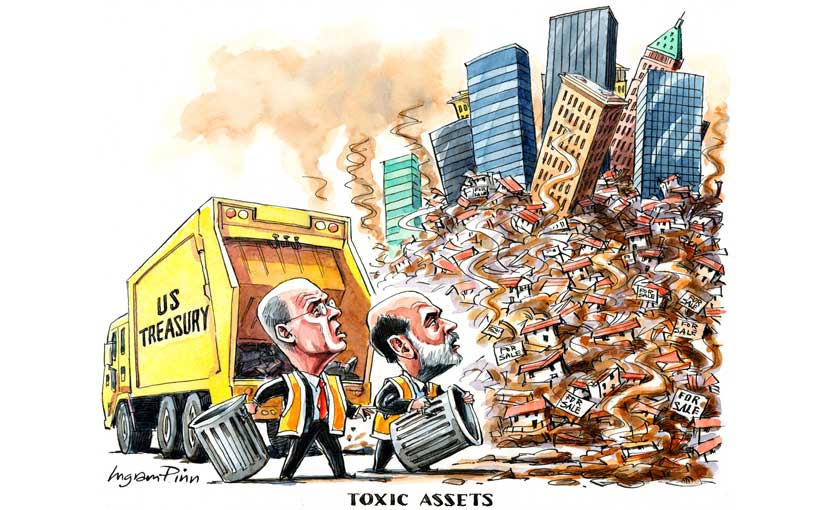
The US government has decided to commence with a plan that will help banks free up toxic debt off their balance sheets in order for these struggling banks to be able to raise private capital. The new plan calls to help banks get rid of up to $1 billion in toxic assets that are causing them lending problems. “The US Treasury said it will launch the program with $75 to $100 billion from existing financial rescue funds with the aim of thawing the frozen market for mortgage backed securities and other hard to sell assets,” said David Lawder and Glenn Somerville of Reuters. Though there is concern that the US government will carry the burden by providing more that 90 percent of the funds to purchase the assets. Other sources of financing are expected to be the Federal Deposit Insurance Corp. and also the Federal Reserve. Treasury secretary Timothy Geithner believes that the plan will help set prices for poorly performing debt left over from the US housing market bust, while involving the market to avoid the risk taxpayers will overpay. As a result of the toxic asset buyback plan stocks have jumped 6.8 percent Monday coupled with an increase in housing sales.


AIG Bonuses to Executives


By Angelo Orlando Jr.


Edward Liddy, chief executive of AIG, yesterday tried to soothe anger against the bailed-out insurance group by urging employees to give back the $165m (€122m, £115m) in bonuses that have sparked a political firestorm.
He told legislators he had asked employees of AIG Financial Products - the arm that brought the group to the brink of collapse - to "step up and do the right thing". The concession came as President Barack Obama defended Timothy Geithner, Treasury secretary, amid criticism of the administration's handling of the controversy.
Mr Obama said he had "complete confidence" in Mr Geithner as the Treasury chief faced calls to quit from at least two Republican legislators. Republicans want to know why he did not challenge the bonuses before approving $30bn of fresh federal aid to AIG this month. Congressman Connie Mack said Mr Geithner "should either resign or be fired for the good of the country".
The president praised Mr Geithner for tackling the crisis with "intelligence and diligence", arguing that he faced the toughest challenge of any Treasury secretary since Alexander Hamilton after the Revolutionary War. "Nobody's working harder than this guy," he said.


Homes Show Unexpected Strength


By Lindsay Chin
Throughout February the sales of previously owned homes in United States showed unexpected strength. Just in February the sales of exisiting homes rose 5.1 percent after a 5 percent decline in January. From seeing the outlook of February sales, economists in March are concluding that the worst parts of the country hit by the housing bust are now beginning to emerge. Sales in the west grew 30 percent from a year earlier. The Obama administration and the Federal Reserve have introduced aggressive moves to try to lower borrowing costs, prevent homeowners from going into foreclosure and reduce the losses in the housing market. Along with sales, initial construction of U.S. homes unexpectedly surged in February. New construction of single-family homes along rose by 1.1%. However, last month (February) Obama had unveiled at $275 billion plan to help homeowners refinance and avoid foreclosure. The administration also included a $8,000 tax credit for first-time homebuyers in the stimulus package. In 2008, stimulus package provided this First-Time Home Buyer Tax Credit which gives people who had not previoulsy owned a home a $7,500 tax credit if they bought a home between April 9, 2008 and July 1, 2009; moreover, it required that the tax credit be paid back over 15 years. Now, the ARRA increased the credit from $7,500 to $8,000 and eliminated the repayment requirement for those who own to occupy their homes for at least 36 months. The market for homes seems on the rise and should be carefully watched.

Source 1, Source 2, Source 3

U.S. Lays Out Plan to Buy Up to $1 Trillion in Risky Assets

By Lindsay Chin

WASHINGTON — The Obama administration formally presented the latest step in its financial rescue package on Monday, an attempt to draw private investors into partnership with a new federal entity that could eventually buy up to $1 trillion in troubled assets that are weighing down banks and clogging up the credit markets.

The Dow Jones industrial average was up sharply in afternoon trading on Monday, gaining more than 270 points. When the Treasury secretary, Timothy F. Geithner, spoke on Feb. 10 of a bank rescue plan without offering much detail, investors took that as a worrying sign and the Dow fell sharply, losing 380 points.
The Treasury secretary did not deny the uncertainties inherent in the new program on Monday but defended it as a practical approach. “There is no doubt the government is taking a risk,” Mr. Geithner said, “the only question is how best to do it.”
President Obama said later that he and his economic advisers were “very confident” that the program outlined by Mr. Geithner would start to unclog the credit markets.
“It’s not going to happen overnight,” the president said after meeting with his economic team. “There’s still great fragility in the financial systems. But we think that we are moving in the right direction.”


Retirement Planning In Your Twenties


Retirement planning while you’re at your first or second job? You’re probably not making a lot of money yet, but compared to just a few years ago when you were primarily a student, you’re taking home a decent income. Still, you have plenty of bills to pay and you’re only earning an entry-level salary. You might wonder if retirement planning matters at all when you're only in your twenties.

Every dollar saved while you are young is potentially several dollars you won’t need to save later. Here are the top three most important steps to successfully begin retirement planning when you’re in your twenties.


Click here to read more...


Written By Lee Ruth

Retirement; Obama


Posted by; Joseph Owen

As I was viewing the Barack Obama and Joe Biden website, I wanted to take a look to see their views on Retirement.  I am interested to see what their plans on in regards to Social Security and Medicare.  These are two vital issues that will affect us as adults.  Social Security may not be able to support and remain affective by the time I am looking to retire.  As this is an extremely important issue for my age group, I was curious to see Obama's perspective on Retirement.  

Obama and Biden are committed to ensuring Social Security is solvent and viable for the American people, now and in the future. Obama and Biden will be honest with the American people about the long-term solvency of Social Security and the ways we can address the shortfall. Obama and Biden will protect Social Security benefits for current and future beneficiaries alike. And they do not believe it is necessary or fair to hardworking seniors to raise the retirement age. Obama and Biden are strongly opposed to privatizing Social Security. As part of a bipartisan plan that would be phased in over many years, they will ask those making over $250,000 to contribute a bit more to Social Security to keep it sound.

Source #1

Save Your Portfolio


By Angelo Orlando Jr.


The last year and a half has taken nearly everyone's portfolio for a loop. If you were considering early retirement and had almost reached your financial goals, you've had a bucket of cold water thrown in your face.
Most of us have seen big losses from our investments. But if you're in your late 50s or early 60s, you've probably suffered a lot more than most others have. Unlike those younger than you, you had already amassed a substantial nest egg toward your retirement -- a nest egg that you planned would last you for the rest of your life. Yet unlike those older than you, you still needed a few years of growth to feel comfortable quitting your job -- so you probably took more risk than they did.
Now, unfortunately, you may need a few more years to get to where you want to be. But the good news is that each extra year you work can make a huge difference to the quality of your retirement when you do decide to tender your resignation. Here's why.


Caution: Retirement Ahead


Here's an excerpt from a really interesting article from Yahoo Finance about how you can ruin your retirement savings.


If 50 is the new 30, then 80 must be the new 60. Good thing, because otherwise a lot of people won't be retiring before they draw their last breath.

Last year Bankrate's Financial Literacy survey found that one in five people expect to work until they die. This year one in five people say they're afraid they'll never be able to retire. It's true; we asked the same question two different ways, and the results are unsettlingly identical.

At this rate, the competition for greeting jobs at Wal-Mart will be as fierce as the struggle to get into Harvard.

For the dedicated workers who aspire to devote their entire lives to propelling the economy forward with their unceasing toil, the dream of not retiring can be achieved in any number of ways. We came up with eight.


click here for the full article
by Rob Wildhack

Securing Your Nest of Eggs Against Layoffs

By Lindsay Chin

Americans lost 2.4 million jobs last year. And more workers are worried about getting a pink slip any day now.
This economic blizzard has many people in both groups -- as well as retirees -- wondering how safe their workplace retirement funds are.
If you're laid off -- or, even worse, your employer folds -- how do you get your pension benefits? How about your 401(k) account? Is there anything you can do now to protect access to workplace retirement assets after a layoff or bankruptcy?

In a season of bleak headlines, the good news is that at least limited safeguards exist for both traditional pensions as well as 401(k) plans.
And the more you know in advance, the easier it can be to maintain unimpeded access to your retirement benefits and unimpeded control over your 401(k) account.
No one protects you from market impact on investments in your account. But any difficulties faced by your employer, including bankruptcy or going out of business, should not interfere with your access.


"It's your money inside the account," said Barbara Fallon-Walsh, head of Vanguard group's institutional retirement plan services. "You are not a creditor of the company. You don't have to get into a line of creditors to get your own assets."
In almost all cases, plans are run by companies separate from your employer. "The record keeper doesn't fold just because your employer might," Fallon-Walsh said. "So you can still get information about your account. The record keeper's name, phone number and maybe Web site are on your statements."


Avoiding Risks to your Retirement Income


I was looking around the Internet trying to find a good article to use for my daily blog when I came across this article. It talks about ways to avoid risk when planning for retirement. I thought this would be a good article due to the fact that its not simply just a list of ways to retire but things to avoid doing when starting to plan for your retirement. With the economy the way it is right now it is important to know the right and wrong way to plan for your retirement that way when it comes time for your to retire they will be able to sit back and relax and enjoy retirement. Below is the article entitled"Avoiding Risks to your Retirement Income".

The risk of outliving your savings is greater than ever, thanks to factors such as longer life expectancies and the diminishing role of pensions and Social Security. According to the Society of Actuaries' 2000 Mortality Tables, 82% of couples who are age 65 can expect to live until age 85; 60% to age 90 and 33% to age 95. By having a plan to secure a comfortable retirement and making the right financial choices, you can help ensure your retirement income lasts.

"The biggest risk that future retirees face is running out of money — and losing financial independence," says Craig Brimhall, vice president of retirement wealth strategies for Ameriprise Financial. "You've got to plan ahead so your money lasts as long as you do."


Click here for more information and the rest of the article.

Posted By Lee Ruth

Top Ten Retirement Trends of 2009


Created by: Joseph Owen

I was reading this great article that I had found on google.  The article is titled,  "Top Ten Retirement Trends to watch for in 2009."  Listed below is the bulleted format of these trends.  If you wish to view the article as a whole, and would like to learn of these trends more in depth, click the link below to direct you to the article.
  • Health Care Refrom
  • People Working Longer
  • People Working Longer with a purpose
  • Fear will be the emotion experience the most
  • More families will stick living together due to the fact that everyone can't afford their own apt. or home
  • Networking of life reinvention
  • Pension tension
  • Retirement Security Overhaul (debt issues with SS, etc.)
  • Steadying the 401K

Wednesday, March 18, 2009

Retirement Guide for 60-Something


Workers in the final stretches toward retirement have had a rude awakening: The seemingly well-laid plans that they saved for during their working years probably won't pan out in their post-working ones. In fact, given the double-digit losses incurred in 401(k)s, as well as rising health-care costs, many fear that they won't be able to retire at all.

However, there are ways to salvage your retirement. While you may not recoup all your losses or get to retire exactly as you planned, you can lessen some of the pain that’s been inflicted on your retirement savings.


Click Here To Read More...


written by Lee Ruth

Retirement Statistics


Created by: Joseph Owen


I was reading an article on interesting retirement facts, when I ran into a statistics page about retirement.  Presented below will be a thorough list of intriguing retirement statistics.

  • One of the 77 million baby boomers reaches 50 every seven seconds. That is around 11,960 people a day and 4 million a year.
  • The age for retirement was set at 65 by Kaiser Willhelm in the late 1800's. It is now generally accepted among gerontologists that life expectancy may exceed 85 years-- and may, in fact, approach the biblical life span of 120.
  • In 2001, 77 million Americans were 50 and older (comprising 28% of the population). By 2020 that segment will be 36% of the population.
  • Nearly 6,000 Americans turn 65 every day, that figure will jump to 9,000 as the baby boomers age.
  • Nearly 35 million Americans were 65 or older in year 2000.
  • Consumers 65 and over make up 13% of the population but account for only 2% of the characters on prime-time TV.
  • In the next 25 years, there will be over a million centenarians in this country.
If you would like to review the rest of the article, click here...

Getting an early start on retirement


By Angelo Orlando


When should we begin to think about retirement planning? When you are young you may think that you don’t need to start thing about retirement until you are well into your thirties. Or you may say to yourself, “I don’t even have enough money right now to even think about saving for retirement.” Well those days are over and young people should start thinking about retirement well before they think they have to. The fact is today young people should begin thinking about their retirement and saving in their twenties. When you first get out of college and land your first job you may be in a sea of debt. What you should do is begin to pay off your debt, especially the debt with the highest interest charge attached because now you are not paying out all these expenses when in fact you could be saving for retirement. At your first job, enroll in your employers 401k matching program it is available at your place of employment. This is a very good way to save for retirement because your employer matches your contribution with no cost to you. Another benefit of 401k matching plans is that your contribution is tax deductible. Your 401k plan is also tax free and you do not pay taxes on the growth of your account until you cash it in after you are retired. Combining your 401k matching plan with saving in your twenties can lead to a great saving base that will only grow as you get older. Saving for retirement in your twenties and enrolling in a 401k matching plan is a good idea because of the uncertainty involving the social security plan in the future.


Tuesday, March 17, 2009

Deferring Social Security Benefits


By Lindsay Chin

The Social Security system allows workers to begin collecting reduced benefits at age 62. However, those who wait until full retirement age are not ranging from 66 to 67 people. Get some 30 percent higher monthly benefits than those who received benefits at 62. Also those who wait until 70 see about a 60 percent more monthly benefits. Another way to maximize Social Security benefits is for couples to use a strategy known as voluntary suspension or file-and-suspend. However, your spouse must agree by signing the Voluntary Suspension of Retirement Benefits Form. Voluntary Suspension of Payments meaning that you have retired and want to stop your benefit now so you can receive a higher early retirement benefit later or receive a late retirement increase. For example a husband who earned more than his wife would be eligible for more than double her benefits. If he starts collecting early he would reduce his wife’s lifetime benefits and his own. Under the Senior Citizens’ Freedom to Work Act of 2000, which eliminates the Social Security “earnings test” which currently limits the amount of outside income retirees can make without suffering a reduction in Social Security benefits. Under the Act if the husband files for benefits but defers collecting them, and they wife starts to collect on his employment record while he accrues credits for the delay.

Monday, March 16, 2009

Retirement: Pension Planning


Created by: Joseph Owen


The video posted below discusses retirement counseling.  In order for people to have enough savings when they retire, a correct retirement pension plan must be in place.  Retirement counseling can help provide aid for those who are looking to secure a retirement pension plan.


"Unretirement"


By Angelo Orlando Jr.


"The Unretirement Index, after polling American workers in August 2008, polled them again in December," said David Jacobson, associate director with Sun Life Financial. "As a result, the latest findings are the first to measure how American attitudes and expectations of retirement have changed since the economic crisis last fall."
The Index, released several times each year, gauges how economic, financial, and societal forces affect working Americans, and forecasts their future retirement decisions which will have an impact on individuals, the government, employers, and the broader economy. "The last few months have been so extraordinary, we had to go back and check on people’s attitudes," Jacobson explains.
Sun Life’s research showed that while the number of Americans who expect to work at least 20 hours a week after age 67—defined as "unretirement"—is largely unchanged, their reasons for continuing to work have shifted dramatically. The most popular reason cited by American workers for why they would continue to work switched from "to stay mentally engaged" to "earn enough money to live well." In the number two position staying mentally engaged remained important, but the number of Americans who cite they will continue working "for health care benefits" rose from the sixth primary reason to the third most common answer, with 64% now listing it as a reason to postpone retirement.